
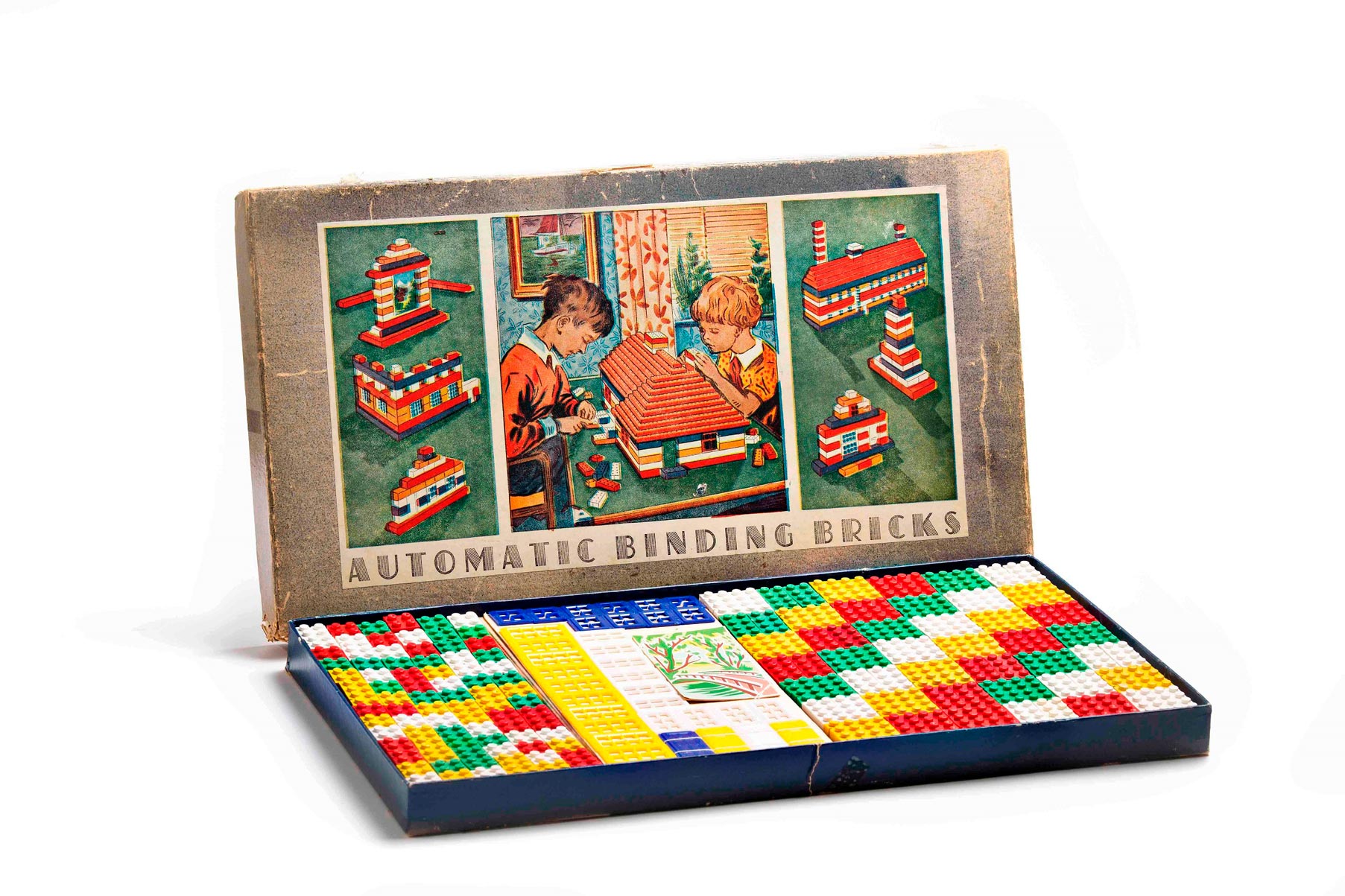
LEGO Automatic Binding Bricks
1949
The LEGO Automatic Binding Bricks were the immediate precursors to the modern LEGO brick and represented the company's first major foray into a plastic interlocking building toy system. They were introduced in 1949.
Key Characteristics
These early bricks established the core idea of a building system, but with some notable differences from the patented stud-and-tube design that came later:
Hollow Underside: Unlike modern bricks with internal tubes for structural stability, the Automatic Binding Bricks were completely hollow on the underside.
"Slots" for Connection: They relied on a simple friction fit achieved by pressing the top "studs" (or "knobs") of one brick onto the top surface of another. The sides of the bricks had small vertical slots that were used to fit specialized window and door pieces (introduced in 1954) into place, as the top connection wasn't robust enough on its own.
Material and Colors: They were made from cellulose acetate plastic and came in only a few primary colors: red, yellow, blue, and white.
Naming: They were known simply as "Automatic Binding Bricks" or "LEGO Mursten" (LEGO Bricks) in Denmark.
Evolution
These bricks were a pivotal stepping stone in the development of the LEGO System:
1949: First released, initially sold exclusively in Denmark.
1954: The name "LEGO Bricks" was trademarked in Denmark, and the concept of the "System in Play" began to take shape.
1958: The patent for the stud-and-tube coupling system was filed, transforming the hollow design into the structurally superior, highly compatible, and robust modern LEGO brick we know today.
The Automatic Binding Bricks laid the foundation for everything that followed, proving the viability of the interlocking plastic brick system.